Benefits of Blogging: 5 Reason to Start a Blog

 Benefits of the Blogging

There are several alternatives to blogging. But, blogging has benefits of its own as compared to other media available on the internet. Within this post, we will understand the benefits of blogging and reasons to start a blog of your own.

The reason for starting a new blog could be subjective. One may get influenced by a successful blogger around or someone who would like to take their business online or to promote their businesses to the next level. Nonetheless, there are only benefits of blogging that helps you to grow personally and professionally and develop several skills.

Until you start experiencing these blogging benefits like how it is essential to connect with the audience, knowing their preferences, what your competitors are doing, etc., you won't realize how powerful starting a blog could be. Writing a new post is always been an enthusiastic endeavor for me. As I begin writing a new blog post every time, I think about the opportunities it creates for me to grow, connect, engage, learn, and grow even more. 

I experienced blogging benefits with my first blog SMS Gallery itself and had a chance to learn many things associated with it. Thanks to all those fellow bloggers and the lovely audience who helped me reach there and taught me many things.

Alright! I have listed these blogging benefits for your understanding. So, without further ado, let's quickly have a look at 5 reasons to start a blog and the benefits of blogging:

1. Start a blog and connect with a large audience

Share your ideas with the large audience
Blogging is a platform where you can express your innovative ideas to an audience across the globe. Not just text-based content but every sort of business idea, hobby, innovation, problem solution could be shared on the blog. For example, a skilled photographer can reach his/her end audience through a blog and gain all the fame/recognition he deserves.

One of the greater benefits of blogging is that it provides you a platform where you can reach millions of users. A single platform could be very much helpful to promote your brand where you have complete control over the platform. One may do a detailed analysis of user behavior and can change content, campaign, enhancement if needed in the process, which will meet the end requirements.

The vast ocean of online users will give you many opportunities and learning experiences through which your product would be more refined and improved during the process change.

2. Start a blog and build a powerful network

Build your network
Through the blog posts, you will be able to communicate with a vast audience. Take this as an opportunity and build a strong network of your brand.

Express yourself as an expert in your area of work. To do so, you will have to constantly study and build the knowledge base. Share this valued information with your audience.

If you are on the right path, many people would like to subscribe to your blog for the righteous information with the facts you are providing. This way you will be creating a community of individuals who keep the same interest and have a great influence on the content you are sharing.

3. Earning money: One of the most popular benefits of blogging

Earn Money
Who doesn't love free money! We all do, right? One of the principal benefits of blogging is that it can earn money for you.

The content you post on the blog can earn money for you. But it's not that easy. Good quality content earns the trust of the audience. A well-researched content is a delight to read. It not only helps readers but helps the author to build a good relationship with the audience, establish authorship, build a good brand image and goodwill, and thus helping the product or services to sell.


Now, there are several options to earn money from your blog. Deep-domain knowledge, exclusively researched content will obviously help you get good readers. But it just doesn't stop there, if you have good writing skills, one may work as a content writer, or post ads on your blog and earn money through advertising, a well-developed blog owned by you can be sold off for the money, design premium templates and sell them for money, so on and so forth. I have listed some of the practical and useful tips on how we make money by blogging in this post.

4. A noble benefit of blogging: Sharing knowledge

Help others by sharing knowledge
It is said that knowledge grows by sharing. Imagine if all the major discoveries and innovations have been kept to the innovator themselves. We all be living in the stone age or at least in similar situations. When we do not share knowledge, slowly with time it diminishes and dies. 

On the positive side when we share our knowledge with others, it reaches more and more people. Through the sharing process, reaches more innovative minds and enables them to grow further. 

Also, with the blog when we share the knowledge we involve ourselves in various studies, conversations, new inventions to improve the legacy systems, etc. This not helps us grow on a personal level but everyone who is involved in the process. 

By sharing knowledge or solving the problems of others we may create good goodwill with our readers.
Over time we can establish a good relationship with the audience and create a strong reader base which will be very much useful to promote your brand, sell products, services, and voice your opinion.

5. Benefits of blogging vs Benefits of social media

Content is king
Blogging and social media, both platforms that will let you share content with the audience. However, they have different purposes and benefits of their own.

A notable benefit of blogging is that the content you post on the blog will stay there forever and is easy to access. Visitors can access it with the help of a URL, link it, or share it.

Social media can be thought of as a medium to share this content. It might let you reach the largest audience, but it is not easy to find the desired content through the vast list of posts coming on social networking platforms.

Besides networking, blogging lets you build a stronger community and other benefits we discussed earlier. Social media can be used to connect the services you provide on your blog. I have written an article on How to Get Traffic to Your New Blog by using social media. That is where it comes in handy. But to hold the content, build a brand, and showcase your products and services, a blog is a must.

6. Building a brand is the best among all the benefits of blogging.

Create your brand
Building a brand involves many things from creating a logo to colors, delivering brand messages through various communications and language, and many other things. Read our post on How to Create Strong Brand Identity for a Blog. While this is all essential, and we will see how it can play a vital role in building a brand. 

When we start a blog, we limit our activities to a specific domain known as niche blogging, which helps the larger audience to understand where we come from. Through consistent publishing, marketing, and communication, we portray our brand as a single entity, which helps us to establish our identity. And through various engagement efforts, we communicate with the dedicated audience which helps to deliver the product to an intended audience.


These all are ways of building an effective brand name. It will help you get recognized as a brand and stand out from the rest.

These are few primary and direct benefits of blogging. To summarize, today we learned how blogging can create a difference in your life. The following are the benefits of blogging:


Do let me know through your comments if you liked this article. Also, share, comment, and do not forget to follow this blog.

Read our next article on how to write the first blog post.

Thank you! 😊


  • Share

10 Incredible Link Building Strategies to Improve Your Blog Rank

Link Building Strategies to improve blog rank


In the current time, link building exercise is the most significant strategy in improving your blog rank.  This blog post helps you to identify 10 incredible link building strategies to improve your blog rank.

Link building exercise is the most important strategy of overall SEO efforts. All webmasters who are aware of the importance of link building strategy, are always in search of the sources to create the links for their blog.

We will discuss these link building exercises in detail. But before that let's understand what is link building.

What is link building?

The link building process deals with creating quality links on other websites pointing links back to your blog or website. 

When we say quality links, it means that these links have to come from good quality websites. Google assigns more weight to the links, which are coming from trusted sites. So, whenever a renowned website creates a link for your blog, it helps to increase the rank of your website in the search results. 

Search engine-ranking mechanism

Earlier in the late 1990s, when there were a handful of search engines available; external links didn't matter a lot. Search engines available back then would use keywords based mechanism to rank sites. Thereafter, people started spamming keywords, use of directories which weren't the right options to promote sites/blogs. This gave rise to promote cheap content with the help of keywords spamming.

Google then introduced backlinks based ranking algorithm. Because of which only sites with authenticated content would rank. Ever since then, Google and other search engines have been using this mechanism to rank sites. Further, the new updates in these algorithms have ensured that only quality content gets promoted. 

A backlink has emerged as one of the instrumental parameters to get your website a high ranking in search engines. Below are the working followed link building strategies:

  1. Competitors link analysis
  2. Guest blogging// guest post writing
  3. Broken link building
  4. Submitting your site to directories
  5. Posting on forums
  6. Adding a link in the comment
  7. Posting links to the question-answer site
  8. Adding links in press release articles
  9. Submitting the link to RSS directories
  10. Adding your links in local citation
Let's have a look at these strategies one by one and build links for our sites.

Strategy #1: Competitor's link analysis

Competitor's link analysis

Let's assume that we have done all prework work that needs to be done on the website. i.e. added quality content, keywords, and optimization of all pages for search engines. Now, our next goal is to get backlinks from the right sources.

To identify the quality link sources for backlinks, you need to study the websites which are already successful in your niche. Competitor's link analysis lets you understand how they are connected to other sites on the internet and what methodology and platforms they are using for link building.

To identify your competitors, make Google search by using primary keywords of your blog and list 10 websites that appear in the search result. Check if these sites fall into your blog niche and complete the list of 10 websites in an Excel file.

There are a couple of free tools (OpenLinkProfilerSEMRUSHOpen Site Explorer) with limited functionality which I assume are sufficient enough to perform competitor's link analysis at a small level. However, if you wish to use premium services that give full details without any limitations I'll recommend using SEMRUSH for the simplicity if offers to use the service.

By using link tracking tools mentioned above track the competitor's website for backlinks sourceshigh authority domain links, testimonials links, directory links,  guest post links, and dead links. Also, you will have to keep a tab on it by making this check-in every week or a month to track new backlinks acquired by your competitor.

An excel file with backlink data should also have details like domain authority rankanchor texttop-ranking web pages from these domains which will help you plan a strategy for your backlinking exercise.

Finally, our aim of tracking the competitor site is to get high authority backlinks for our site. Therefore, approach site owners for any link opportunity you find through this tracking process, submit your site to directories, or fix broken links by offering your site link as a replacement.

Strategy #2: Guest blogging/Guest post writing

Guest Blogging Guest post writing

Guest blogging or guest post writing is nothing but writing a blog post on someone else's site and in return, you get a backlink to your site. Guest blogging could be a highly effective strategy for link building and getting traffic to your site. Despite that many of the bloggers doubt it's effectiveness and write content for the sole objective of getting a backlink.

Keep below-mentioned tips in mind when writing a guest post:

  • Write a quality post that provides valued information and experience to the user than writing a low-quality post. A qualitative post will influence readers to visit back to your site for more such work.
  • To get approval for a guest post from an established blogger, you should engage yourself with the author. Commenting on his blog posts, sharing his content frequently to grab his attention are some ways to grab the author's attention. 
  • A guest post should be just like any normal post you write on your site. You may include high-authority links from external sources and maybe just 2-3 links of your own site rather than spamming it with too many links.
  • If you are aiming to borrow traffic from the website for which you will be writing, then choose a website that writes a post every 2-3 days or every week. Highly popular sites that publish 2-3 posts or even more posts daily would make your guest post lost in the flow.

Strategy #3: Broken link building

Broken link building

Broken link building lets you create a backlink on another site by reporting a broken link to the site owner and offering him your link as a replacement for the broken link. Broken links cause harm to SEO efforts as well as user experience. Hence site owner may agree to your proposal if your post has relevant content.

We have already seen how to look for a competitor's link profile in the first strategy. In the same way, we can use backlinks finder tools to locate site URLs of these niche sites which gives a 404-page error (broken link error). Later, you can approach these site owners to replace the link with your own page link.

Strategy #4: Submitting your site to directories

Submitting your site to directories

Web directories are nothing but the sites that list various sites in their database under several categories. Getting backlinks from these directories is one of the effective ways to build your linking profile.

What are the benefits of submitting the site to web directories?

  • Spam-free web directories could provide you quality backlinks which will help you rank better in SERP.
  • Web directories not only help us in building backlinks but also in getting massive exposure to your site. Increased traffic could help you increase your revenue or sell your products faster.

In a notepad or excel whatever you prefer and write down the following things:

  • Your site URL
  • Site title
  • Description text
  • Important keywords
  • Valid email to register
  • RSS feed URL
  • Social media links
  • Site category
Now visit authoritative web directory sites and fill in these details to include your site in these directories. I made several searches to find free web directories that actually work in 2017. Many of them list either paid sites or have outdated site listing. I find this article useful from the rest of the sites that list High PR Directories.

Strategy #5: Posting on forums

Posting on forums

Forums are user communities where users who seek the same interests, gather and share information, and solve one another's queries. Forums could help you get quality backlinks by providing a solution to those who are seeking the information. Add your site link in the feedback form while you share content on the forum with other users.

A simple way to get traffic and the backlinks from a forum is to search for the problem statement by using specific keywords. Before this, create your profile with basic details and your site link. Once it is done, click on the relevant thread that relates to your site page and provides a solution to the problem mentioned in a thread. Finally, mention your site link in the description.

Best SEO practices:

  • Be relevant to the topic of the thread and don't go off the track. Don't spam every thread with the same content but be creative in your communication.
  • Engage in conversation with other members and build a friendly relationship with them. 
  • Also while you help other members create a value-add through your solutions.

Strategy #6: Adding links through comments

Adding links through comments

Adding comments on others blog help you get quality backlinks to your blog. This is one of the easiest methods to get quality backlinks to your site, but there are certain checks you must do before you start commenting on other's blog aggressively.

Best SEO practices:

  • Generic comments like, "Nice post!" create no value and hence not much beneficial. Rather will get ignored more likely.
  • Create a profile on a couple of blogging and social media platforms. Add an image to your profile to prove that you are an authentic user.
  • Write descriptive comments that add value and relevance to the post content.
  • If you use your business name or important keywords as a user name which could be more beneficial as it gets hyperlinked and hence better from the SEO perspective, but the site owner may not like your comment thinking it as spam comment. Though, if your comment is really contributing to the thread then your comment might get posted.
Benefits of commenting:

  • Commenting on other's blogs increases the chances of getting your blog indexed by Google more quickly.
  • Do-follow or no-follow comments, it still helps you get backlinks from high authority websites.
  • A well written descriptive comment helps to influence the visitors of the site and may also create curiosity in his mind to follow your blog.
  • Commenting provides a chance to connect with established bloggers and help you get recognition in the community.

Strategy #7: Posting links to the question-answer site

Posting on question answer sites

Question-answer sites are the common platform to get any question answered by the users. These sites have high page ranking and it is a good platform to get backlinks to your site.

Start looking for the questions on these sites which are related to your blog posts. Once you locate these questions you may answer them in writing a short descriptive solution and a link to your site.

This post I came across lists the top 15 question answer sites of the year 2017.

      Best SEO practices:

      • While you answer the queries posted on question-answer sites create value-add through your answers.
      • Don't spam threads by adding just a link to your post but post descriptive solution also.
      • Engage in communication with the users on the sites.

      Strategy #8: Press release articles

      Press Release articles

      Companies use press release articles to make important announcements or product launches to syndicate news media. Later these media houses may cover stories on such press releases.

      Though a trend became common for companies making press releases every in a while, these press releases help them get backlinks from the webmasters in good numbers. No sooner Google started to penalize these companies and even those sites that shared these links.

      However, nowadays no-follow links still can help you get a good number of backlinks without upsetting Google.

      Best SEO practices:
      • To use press release articles, your article needs to have something potentially good to be shared. 
      • Press release articles should have important keywords only. A spammed article may get penalized by Google.
      • Add no-follow backlinks in your article to ensure that it doesn't get penalized.
      • Choose the right words for your anchor text for its effectiveness.
      • Include only 2-3 links to your site in your article or it gets penalized.

      Strategy #9: Submitting a link to RSS directories

      Submitting links to RSS directories

      Nowadays every leading blogging platforms provide you RSS service and some directories list your articles based on your RSS feed. Some of these directories provide high-quality do-follow backlinks which help in improving your Google ranking.

      This article lists the top 20 RSS directories where you can submit your blog feed. Some of the blogs in my niche which are highly popular use these directories to improve their link profile. So these are worth noting.

      Strategy #10: Adding citation on local platforms

      Adding citation on local platforms

      A citation is nothing but online references to your business name, business address, and business phone number. A citation can be included on your website, local business directories, and apps. But, as we are looking at this from SEO and link building perspective, hence we will consider external options.

      It is far easy to rank high in local business directories than the global platform. A citation is one of the factors Google takes into consideration for ranking your site in local search results. Having citations on several business directories ensures the trustworthiness of your site and ranking in Google SERP.

      Best SEO practices:
      • Include the citation for your blog in local directories, social media platforms,  as well as industry-specific directories. 
      • The local, geo, or industry-specific directories vary from business to business. Hence find out them and add your blog citations into these directories.
      • Also, a citation strategy may not apply to all blog niches.
      Conclusion

      The strategies we discuss will give you enough opportunities to create valuable backlinks in the right places. The backlinks will help to boost up the ranking of your blog.

      These tips will help you plan your SEO strategy better to get a better ranking in SERP. Let me know your feedback through comments if these strategies work for your blog.

      Give this post a share on your social media channels and do not forget to subscribe to Blogging Hacks.
      • Share

      Color Theory and Color Meanings in Blog Design

      Color Theory and Color Meanings in the blog design

      Do you feel confused while working with colors? Well, you wouldn't after reading this blog post. Choosing the right colors in your creative work is quite confusing at times. Within this post, we will make this process easy and understand Color Theory and Color Meanings in the blog design.

      The color theory basically deals with the correct use of the color combinations and their effect on the final product. It is a science behind the creative work which ensures that the right message and ambiance is being delivered in your product, design, or a blog for that matter.

      Why color matters in the blog design?

      • We put a lot of effort into various activities like branding, designing, writing the blog post, and promoting it. If it couldn't make the right impression among your visitors, all your efforts will be wasted.

      • Additionally, your blog has a personality, an ideology that needs to be carried out so rightly. That helps in maintaining the brand reputation. When a new visitor visits your blog, you nearly have 8-10 seconds to impress him and sell your brand.

      • Color theory becomes an essential aspect of your blog design which ascertains the personality of your blog to be professional and serious. We definitely want our readers to have a pleasing experience with our blog. We don't want to mess up or confuse them by choosing colors that do not go well with the blog.

      • With the help of colors, you can convey a mood, create an environment, send a clear message, or grab the audience's attention. The right colors help us build the connection and fill up that gap by creating the appropriate atmosphere.

      • Since color affects your mood, creates a pleasing ambiance, and grabs the audience's attention, you should use colors that make your visitors relaxed, happy, and comfortable. Hence it becomes necessary to understand the color theory and science behind it.

      Let's understand the colors first and how they can affect your blog.

      The color wheel and the color categories

      Science says that human eyes can see nearly 7 million colors and women can see even more colors as their brain works and perceive colors differently. Though worry not, neither I have the capacity to explain all these colors nor wish to do so! 😁
      However, we will have a look at the color wheel, will try to understand color categories and see how they work with each other.

      Color wheel primary, secondary, tertiary colors

      We have labeled these colors as primary colors, secondary colors, and tertiary colors in the above color wheel.

      i. The primary colors: Red, Yellow, and Blue

      Red, yellow, and blue are the primary colors in traditional color theory. These are named as primary colors as these colors cannot be created by mixing other colors.

      ii. The secondary colors: Green, Orange, and Purple

      These are the colors which are made by mixing two primary colors. The group secondary colors include Green which can be produced by mixing Yellow and Blue, Orange by mixing Yellow and Red, and our third color Purple by mixing Red and Blue.

      iii. The tertiary colors: Yellow-Green, Blue-Green, Blue-Purple, Red-Purple, Red-Orange, Yellow-Orange

      The third group tertiary is made by mixing one primary color and one secondary color. There are six colors named above which come under this category.

      So, that was about major color groups. Furthermore, these colors can be mixed with each other in various combinations and millions of colors can be produced.

      These colors are also classified into three major categories based on the effect they produce on the human mind. These groups are warm, cool, and neutral colors. Let's have a look at each group.


      i. Warm colors

      All hues of red, yellow, and orange fall into this category. Warm colors are striking and bold in nature. Warm colors represent warmth and hence the name. People often associate them with sun, fire, and energy.

      ii. Cool colors

      Cool colors, on the other hand, induce us the feeling of calmness and soothing. Cool colors include hues of blue, green, and purple. Water, sky, and plants remind us of the cool colors.

      iii. Neutral colors

      Neutral colors as the name suggests doesn't fall into the warm nor the cool category. Hence these colors are not included on the color wheel.

      All hues of white, black, and grey are counted into neutral colors. They serve a very useful purpose in designing and used in combination with accent colors (cool and warm colors) which in all cases complement the accent colors being used.

      What colors convey and which brands use it?

      Blue

      Blue peacock

      Blue is the color of harmony. The blue color symbolizes calmness, peace, and trust. It is the most favorite color among people. Most of the large companies use blue in their branding.

      From a psychological perspective, the blue color is more trustworthy, reliable, and secure. It creates a soothing effect. It can promote the feeling of calmness and harmony.

      The blue color can be used to promote manly products, products associated with cleanliness, air and sky, water and see.

      Companies that use blue in their branding are:
      • Facebook
      • General Electric
      • IBM
      • Intel
      • Nokia

      Purple

      Purple Flower

      The purple color symbolizes royalty, spirituality, magic, mystery. The Roman magistrates and Egyptian kings used to wear purple color and hence it is seen as a royal color.

      There is a story behind why this color is seen as a royal color. In the olden days, there weren't many resources available to create colors, unlike these days. Whatever available in nature was used for dying clothes. The purple is scarcely available in nature and hence dying fabric with this color was costly and required too much effort. For this reason, only the royal and wealthy could afford purple clothes. That is how purple became the color of royalty.

      This color goes well in feminine designs and to give products a royal touch.
      Companies that use purple in their branding are:
      • Hallmark
      • Cadbury
      • BenQ
      • Nivea
      • Yahoo

      Red

      Red Flower

      Red is associated with love, danger, anger, violence, desire, prosperity, happiness, and strength. Red is also a religious color.

      Red goes well with the brand where quick attention and decision are needed. It can also be used to feature an energetic, youthful, and loud approach. It is used for fire brigade vans and in signal lights to ring the alarm in your mind after seeing it.

      It is a very intense color and has the highest wavelength. It is a highly visible color and often used where the quick attention of people is required. Hence it is a good color for "Buy Now" and "Click Here" buttons, and advertising banners.

      Companies that use red in their branding are:

      • Coca-Cola
      • Netflix
      • Virgin
      • Kwality Wall's
      • Heinz

      Orange

      Orange pumpkin

      Orange is connected with warmth, energy, excitement, sunshine, enthusiasm, encouragement, good health, and happiness.

      Orange is a very attention-grabbing and energetic color. It gives you emotional strength in tough times. It also encourages stimulating a two-way conversation. As we see that it is a very energetic, exciting, enthusiastic color, hence brings people to think together and have a conversation.

      It also helps in stimulating the appetite. Hence, many restaurants are decorated in orange color. It helps their customer engage in deeper conversation, increase their appetite, have a good time, resultantly consume more drinks and food.

      This color is good for promoting food products and toys. It can be used to highlight and grab the audience's attention quickly.

      Companies that use orange in their branding are:

      • Blogger
      • VLC
      • Nickelodeon
      • JBL
      • Fanta

      Yellow

      yellow lemons

      Yellow color represents sunshine, warmth, happiness, joy, optimism, and on negative side cowardliness. Yellow is attention-grabbing color. It helps us study, focus, and remember information.

      Yellow is the most striking color. It can be seen from a long distance when used in combination with black. For the same reason, it used for school buses, taxis, and traffic signals.
      Alike orange, yellow is also used for food products. It is an attention-grabbing color and children get more attracted to yellow. Hence it is used in children's products and advertisements.

      Companies that use yellow in their branding are:

      • Nikon
      • Sprint
      • Maggi
      • Lipton
      • DHL

      Green

      Green plants

      The earthly color green represents nature, health, safety, money, fertility, and growth. It is said that green color has healing powers. This color is largely found in nature. Hence, it is also often associated with prosperity.

      It is often used in medical products. The dark green color is often associated with the military, currency notes, and medical products.

      Companies that use green in their branding are:

      • BP
      • Android
      • Animal Planet
      • Starbucks Coffee
      • Acer

      Black

      black zebra

      Black is the darkest color. It is associated with death, fear, mystery, evil, witches, night, and magic. On the positive side, it is connected with style, power, and seriousness.

      It is also used to denote negativity, empty and unknown areas.  It is mostly used in printings books, newspapers, and documents.

      Companies that use black in their branding are:

      • Nike
      • Adidas
      • Gillette
      • Disney
      • Sony

      White

      White swan

      White represents light, purity, goodness, positivity, cleanliness, peace, and faith.

      White represents cleanliness and often used in design to equal the balance with other colors. It is the color of perfection as it is considered to be purest and complete color.

      It can be used to promote dairy products and medical products.

      Companies that use white in their branding are:

      Almost all brands use white by default in their branding colors.

      Conclusion

      We learned that color theory is about using the right combinations of the colors in your design. We can use perfect colors in the design by understanding the science of the colors. Hence we understood the basic color palette.

      We had a look at the color wheel and how colors are categories into the primary, secondary and tertiary categories based on their evolution. Furthermore, we understood how these colors are categories into warm and cool categories. We also had a look at neutral colors.

      To understand the better application of the colors we understood what each color has to say, their meaning, and where you can use them.

      So, next time whenever you are designing or playing around the colors, you know which color to pick for your design/ blog. We will talk more about colors but in the next post. If you have liked this post, do share it with your friends. Happy designing!😊
      • Share

      How to Create a Strong Brand Identity for a Blog

      How to Create a Strong Brand Identity for a Blog

      Like Wikipedia says, a brand is a name, term, design, symbol, or other feature that distinguishes an organization or product from its rivals. Within this blog post, we'll see what is brand, branding, and how to create a brand identity for your blog.

      Brand
      When we talk about a brand, a couple of things come to mind, like logo design, it's business activities, tagline, products, and etc. to name a few. A brand is basically a unique identity that helps your readers or customers recognize your business among your competitors. In simple words, it is an emotional connection between you as a business and your customers.

      Branding
      When we dig down further in this context, a term branding comes into the picture. The process which involves creating a strong and positive identity of your brand in the mind of the customer is called branding.

      Branding involves creating your logo, defining mission statement, laying out rules and regulations to keep consistency in your marketing communications, fonts, and color themes.

      Brand Identity
      Going even further, brand identity becomes a result of all the efforts taken by the company to promote the brand to the customer as a single entity

      Why branding for your blog is necessary?

      Why branding for your blog is necessary?

      • Impression: The right branding efforts makes the first impression impactful in the mind of visitors. It is always good to have a positive impression among your readers when they visit your blog.
      • Seriousness: It makes you look serious in the line of business. We all bloggers always work in collaboration with each other as well as with our readers. We can not let our blog look casual anytime. 
      • Unique Identity: Branding makes your identity unique. It makes your readers aware of your presence. It establishes a connection between the blog and the blog readers. Your readers will start to recognize your blog as often they visit and spread the word about your presence through the influential channels.
      • Helps you Grow: Branding helps your blog grow by building authority. Branding builds a positive image. Hence, building trust and personal attachment with readers. Ultimately, helping your blog grow.
      • Helps you sell: Branding helps in building authority as discussed above. A high authority blog makes selling products or services easy. Hence generating better revenue.

      To take blogging ambition to the commercial level, the branding of the blog is very much necessary. Branding helps to create an impactful image for your blog. Within this post, we will have a look at all the factors that help to build a strong brand identity for a blog.

      In a brand development process, we transform a couple of blog elements. We set certain rules and guidelines for marketing communications. We make sure that every communication that is taking place follows these rules and our blog is as per these standards.

      Let's have a closer look at the elements which ascertain an impressive look of the blog and builds a professional brand image.

      1. The blog name

      The first and foremost factor that comes to our list while creating the brand identity is the blog name. Finding a unique blog name is a complex task. Since there is a huge competition and you may not get the desired name so easily.

      Though we will ensure adhering to below points while deciding the blog name:

      • A blog name should be unique and original.
      • It should be easy to remember.
      • It shouldn't be taken by anyone else before. 
      • It should be descriptive enough to get understood by everyone.
      • Should have a connection with your niche.

      All these points need to be taken into consideration while deciding the blog name. Also, you need to be careful, as once chosen the blog name, it is going to stick around with the blog for forever.

      2. Choosing the blog address

      A blog address or a domain name plays a vital role in building your blog identity. It should be unique and not confuse your readers with your competitors. Here is the list of other factors that need to be considered while registering a domain name:

      • It should be short and easy to remember.
      • A blog address should be easy to type. Should avoid confusing spellings.
      • Include your keywords in your blog address
      • Try to get a .com extension or an extension that best suits your niche.
      Registering the desired blog address is really a difficult task. All creative blog names are already taken. Hence do quick research before designing a blog logo and registering the address. 

      3. Designing the blog logo

      The next step is to design a creative logo that can be used in marketing communications and for the blog as a face image. Look at it as a face photo with which all people will associate. Now, the logo can be designed in three ways. Those are:

      i. Logo with typography: This type of logo contains pure typographic work that represents your brand name. Google, Cadbury, CocaCola are few examples who follow this type of logo style.
      Logos with typography

      ii. Logo with a symbol: Some brands use a symbol to represent their brand. A single icon or a graphical object is used as a logo that gives a clear picture of the brand. Apple, Mercedes, Twitter, Playboy are some brands that use this type of logos and easily recognizable.
      Logos with a symbol

      iii. A logo with mixed elements: You will find many brands with this type of logo. So in this category, we use both, i.e. text and symbol to design the logo. A new blog should have this type of logo. Once you have enough exposure you can go for the logotype that we discussed in the second category. Blogging Hacks has this style of logo. Some popular brands that follow this type of logo style are BMW, AT&T, Puma, so on, and so forth.
      logos with mixed elements

      (Note*: We do not have any kind of affiliation, connection with the brands listed in this post. These are purely to list out the logo categories and information purposes).

      Best practices for logo designing:

      • Keep originality in the logo.
      • Make sure it has a connection with the blog and the audience.
      • It should tell the brand story.
      • The logo should look good in the brand colors, black and pure white color, small and large size.

      4. Write a catchy tagline

      A blog tagline is the key piece of the information that helps your readers understand what is your blog about. It could also define the long-term goal of your blog.

      Some of the popular taglines used by famous brands are:
      McDonald's – I'm Lovin' It 
      Imperial Blue – Men will be men
      KFC – Finger-Lickin' Good
      Kit Kat – Have a break, have a kit kat

      A tagline could be very helpful to a new visitor visiting the blog for the first time and has no idea about the content on your blog. It helps readers understand the blog niche and the objective of the blog. A tagline gives you an opportunity to build an image before a user starts reading the blog.

      A catchy tagline helps to build brand identity in the mind of the readers. Hence, consider below tips while writing a tagline:

      • It should contain a positive message
      • It should be written in the active voice rather than passive voice. 
      • Use strong words to make it impressive.
      • Keep it concise.

      5. Choosing the color palette

      There is a lot to talk about the color theory and simply can not be covered within this point. Colors have a connection with psychology. Colors can convey emotions, feelings. For eg., the red represents anger, love, or glory, blue represents peace, black represents silence.

      You may read the blog post on Understanding Color Theory and Meaning of the Colors to understand which colors best relate to your blog niche and the title. List down 6 different colors excluding black and white (are added by default in every color palette) which could be used in different marketing communication and on the blog.

      One or two colors from the color palette should be chosen as your primary colors and these can be used in the logo, blog, and every marketing communication.

      Your blog, social media channels, emails, and every marketing communication should follow these colors only. It creates a strong brand image and attracts your audience.

      6. Selecting fonts for your blog

      Now there is one principal rule to follow. The font used in designing the logo should not be used in other text elements of your blog. This helps to keep your blog logo prominent rather than getting it lost in the rest of the texts on the blog.

      The second thing is that you will have to define different types of fonts that can be used in various text elements on the blog. For eg., different types of headings, quoted, or emphasized text, normal body text, attributions, etc.

      While we choose different font styles and typefaces for the blog, one thing needs to remember is that we should keep consistency in using these fonts throughout all the marketing communication, blog, and collateral documents.

      Know the different types of fonts and choose the right type of font for your blog:

      • Serif: This type of fonts has curvy lines at the end-points of the letters. These are classic and traditional fonts and generally used in publications of the books and newspapers. Eg., Times New Roman, etc.
      • Sans-serif: These fonts don't have the curvy lines at the end-points. Instead, each letter is represented in a clear sharp shape. These are easier to read and used in the blogs, and other digital collaterals. Eg., Arial, Calibri, Raleway, etc.
      • Script: This type of fonts have cursive and connected letters. They generally follow a calligraphic style and are used where the extra emphasis is needed. Eg., Great Vibes.
      • Strong fonts: These types of fonts are generally attention-grabbing and have a bold appearance. They can be used in headlines to attract readers' attention. Eg., Impact


      7. Selecting and customizing a theme

      One of the tedious job in brand building exercise is to select and customize a blog theme. A lot many tiny details have to be taken care of while customizing a blog theme.

      Since it is nearly impossible to find a theme that offers all the features you desire for your blog. Hence, find a theme that closely matches your requirements.

      So we will find a theme that has an outline and structure we wish to apply to a blog. Be sure about using 2 or 3 columns layout, having a responsive and mobile-friendly template. Now, to convey a uniformity throughout the blog, a couple of things you will have to update in the selected theme.

      • The first and foremost thing is selecting the font. It includes all settings for mentioning font-family, different font sizes for headings and paragraph text, list items, links and etc.
      • The next thing is to include your brand colors in your theme.
      • Add your blog logo and favicon in your theme.
      • Define a format for picture elements and the iconography

      8. Sticking with the niche

      We should stay focused on a particular niche rather than touching a variety of niches. We will observe what your niche audience wants from the blog and work towards it to meet the desired goal. We will try to provide a better solution to your audience which is not done by your competitors.

      Working in a specific niche helps to build a stronger brand image. A stronger image could help to become a leader in the chosen segment and gives vigorous competition to your business rivals.

      There is a term is called niche marketing. Niche marketing involves putting your marketing efforts towards a specific segment and targeting a specific group of audience. Niche marketing is an effective tool to create a strong brand identity.

      9. Building the common language 

      A common language is always easy to understand and helps to connects with the people. A personalized touch in your writing helps to connect, people with the brand even more closely. It helps to develop a personal relationship with the brand.

      Depending upon the niche and the audience type, we will use or restrict the use of technical words and jargon in our writing. Including readers in the story, and making them part of it is another strategy to keep them engaged.

      Take an example of Google, nowadays, we do not search for the information, we Google it. That level of branding needs to be incorporated into our language.

      10. Consistency in all collateral assets

      All big brands are easily recognizable through their slightest presence over any medium. Many times you might have recognized a brand featured in a TV commercial without watching that ad completely.

      Ever wonder how this happens? The answer is consistency. Their content looks so exclusive from the rest of the brands and easy to recognize. Consistency helps to build awareness, trust, and loyalty with your readers. Blogs changing their appearance often, fail to build a strong brand identity.

      Streamline the brand guidelines concerning logo usage, fonts, color, messaging, photo, and iconography. Keep them consistent in all channels of communication. Document the guidelines for future references and in case you need to share them with anyone else.

      With that point, our list of creating a strong brand identity for your blog has come to end. Let's have look at what we discussed in this post.

      Conclusion:

      We had a look at the terms brand (a unique identity), branding (the process of creating the brand image), and brand identity (the final image positive or negative after all efforts).

      We understood branding helps to make our blog presence impactful, brings seriousness, creates a unique image, helps the blog grow, and sell your services.

      We had look at all aspects that help to build a strong brand identity. It includes creating and shaping a personality for your blog. We follow certain rules to enrich its unique personality and make it impactful.

      I hope you had a good reading experience. I would like to know from your end what practices do you follow on the blog and communication channels to make your brand identity stronger? Let me know through your comments and do not forget to give it a share. With love! 💗
      • Share
      SEO

      Is Quora a New Source to Drive Traffic to Your Blog

      How to drive traffic from Quora to your blog

      Quora is basically a question-answer site where a user can ask questions and get answers from other users. Most internet users must be acquainted with this website at least once. Within this post, we will explore how Quora could become a new source to drive traffic to your blog.

      To understand how Quora is a crucial part of this strategic approach, observe Google search results for every query you make on Google. You will find at least one Quora link in the first 10 results. Realize the potential, the amount of traffic it could draw to your blog. Quora has a vast list of questions and answers to satisfy your quest for traffic.

      You will find many users giving prolonged answers covering substantial information in their answer's write-up. This is nothing but the part of a strategic approach to drive traffic to their blog from Quora.

      Is that so easy to drive traffic from Quora? No, it isn't. It takes a lot of precision in your opinion, proactiveness, authority on topics, and loads of patience. But then don't get disappointed. We are here to help each other, aren't we?

      So, what does it takes to have that authority, proactiveness, and precision over the topic? We'll have to look at it step by step.

      Quora has a tremendous amount of traffic, precisely over 300 million monthly unique visitors (2018 statistics), as stated by Ryan Browne, VP of Revenue at Quora.

      Such massive traffic which is ever-growing and not utilized properly. Imagine if you could drive traffic even a thousand users to your blog. Quora traffic could give results in a lesser time span as compared to SEO and it is a sustainable source.

      Let's have a look at the strategic approach to drive traffic from Quora.

      1. The Authority - Setting up a profile

      Why it is necessary to set up a profile? You could straight away write pleasant, lengthy answers and get to enjoy that traffic, isn't it? But it is necessary to set up your profile before you do so.

      A well-written profile explains your reader who you are, what are your skills and expertise.

      A profile picture, with your bio, and expertise could help you to establish authorship among your readers. Users could relate and will have reasons to trust you.

      Additionally, you can include your blog link and social media links in your profile. Your reader might want you to follow you on social media too.

      2. Choosing topics for your questions

      The next step after creating a readers-ready profile is choosing a topic for your questions. There could be multiple topics for answering questions. The only factor you should consider while answering the questions is that you have to be 100% perfect.

      Now, our ultimate goal is to drive traffic from Quora to your blog. Hence on Quora, we will stick with the topics that are related to our blog.

      In my case, I can choose to answer questions that are related to starting a blog, monetizing options, free resources for blogging, SEO, and so on. You can choose topics that are related to your blog.

      On a home of the Quora, you can edit and add topics relating to your niche in the left panel.

      3. Finding the right questions

      The most crucial part of this strategy is to find the right questions. Questions with a high number of answers and followers should be your prime destination.

      Yet, you should avoid the most highly popular questions unless you have something extra to contribute which is not done by anyone else. Highly popular questions are already answered and these are extremely competitive. There is the least chance you could derive something from there.

      The questions which are posted recently and not older than a week, questions with answers ranging from 20-50, and followers more than 20 should be your prime spot.

      More the followers better will be the opportunity to get highlighted. Since when you post an answer on a question with the high number of followers, those many followers get notified.

      4. Long answers over the short answers

      Well, this is a bit tricky part and you will have to get the best of both worlds. Take care of a few small points here and you are sorted.

      • Write well descriptive and long answers.  However, your answer should not reveal everything, at the same time a reader should feel valued while reading your answer.
      • Avoid using long paragraphs. Instead, break your answer in small chunks of lines, making a paragraph of not more than 4 lines.
      • You can arrange your answer in points. Use formatting a little to make words bold, make a number list, or bullets to list out the points.

      A user should have a pleasant experience while reading your answer. The user interface and everything else cannot be managed by the contributor. Though, formatting the answer could make a little difference.

      5. Include pictures in your answers

      You all know that a picture could convey a thousand words. Pictures grab the attention of the readers than normal textual answers. Hence for better impact use images in your answers.

      Including infographics in your answers is a good idea. I often do that. Statistical and even categorical data can be converted into an infographic. This looks really amazing and catchy as compared to other plain answers.

      However, any random pics won't add value in your post. You should be able to find relevant images or at least relate images being used in your answer to the story being conveyed.

      6. A final step, adding links

      Once you are done answering the question and happy with your writeup, the final step is to include a link to your blog post.

      As discussed in point #4, we do not reveal complete information and keep some information on our blog for readers to follow. So that they find a need to click on the link and read the rest of the information on your blog.

      Write a good call to action while placing a link in your answer. A reader should be convinced completely to follow the link and visit your blog.

      There is another approach. You may give full information to the reader and place several links to your blog (don't spam with so many links, 4-5 links are fine) relevant to the topic of the question being asked.

      An SEO technique could be applied here while adding links. You may use important keywords for the anchor text so that your keyword ranking, PA, and DA have a benefit out of it.

      7. Review before you post

      It's a good practice to review your write-up before you publish it online. Verify your answer for correctness, language, etc. See if you have covered all the points asked in the question.

      Apart from that, you should correct spelling mistakes, ensure there are no missing words, and fix grammar mistakes if any.

      Poorly written answers may create a bad impression and may convey a lack of seriousness. Your answer should have the highest level of precision.

      8: Proactiveness and regularity

      Once you are familiar with how Quora works, the next step is to apply that strategic approach proactively. Answering one or two questions wouldn't take you anywhere.

      To get regular traffic from Quora in a greater number, you will have to answer more and more questions as possible. Your answers on Quora will definitely become a new source to drive traffic to your blog.

      Proactiveness and regularity are the key factors that make this strategy practically successful.

      Conclusion

      There are a variety of options one could drive traffic to their blog. We have listed a few amazing traffic sources for a new blog in the post How to Get Traffic to Your New Blog. To me, Facebook and Google are the prime traffic sources and work well for my blog.

      Writing answers on the Quora is a crucial part of the strategic approach. Many bloggers use Quora to drive traffic to their blog and hence there are prolonged answers with the links.

      Quora has huge traffic, in millions per month. We can drive some of this traffic from Quora and get benefited. To do so we need authority, proactiveness, and precision in our answers.

      We set up a profile to build the authorship and trust among users. Later we define our domain by selecting the right topics which are relevant to your blog.

      Furthermore, we find questions that have the potential to drive traffic to your blog. We looked at writing descriptive answers and restraining an urge to follow your blog.

      Including pictures in your answer may put life into a text-heavy answer. Adding contextual links in your answer would make the user follow the link.

      Finally, before posting your answers on Quora, it should be checked for correctness. In order to work your Quora strategy effectively, you will have to work on it proactively and regularly.

      Do not spam your answers with too many links or affiliate links. The ultimate motive should be to route Quora traffic to your blog in search of the information.

      I always urge readers to comment on the blog post. As it encourages and helps me write more and more blog posts. Please let me know through comments if you liked this post. Give it a share on Facebook, Twitter, and LinkedIn.
      • Share
      SEO

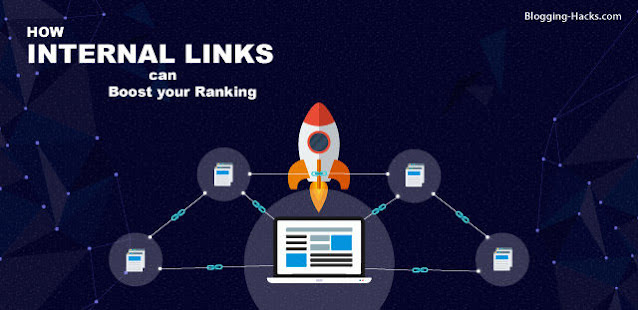
      How Internal Links can Boost your Ranking

      How Internal links can boost your ranking

      Internal links play a significant role in link building exercise. Within this post, we will have a look at what is internal linking and how internal links can boost your ranking.

      So, what are internal links?

      Links which points to the links within the same website are called internal links. In other words, any links on a particular domain (mysite.com/home-page.html) pointing to another link (mysite.com/contact-us.html) on the same domain are the internal links of that domain.

      The links placed within the sidebar, top menu bars, footer and even in breadcrumbs are all examples of the internal links. These links help Google understand the hierarchical structure of your blog. They make navigation and access to your blog easy and faster.

      However, links placed within the actual content part of your blog serve a more meaningful purpose. In the following story, we will see how these internal links can boost your ranking and Page Authority (PA) of your blog post.

      Let's have a look at benefits offered by internal linking to boost your blog SEO.

      Benefits of the internal linking

      Benefits of Internal linking

      1. Internal links can boost PA of non-performing pages

      Let's understand what is PA first. Page Authority is the metric which is developed by Moz to foretell how well a specific page will perform in search engine ranking. It uses score 0-100 to rate the performance of a web page. 0 being the low and 100 being the higher chance to rank in SERP.

      Naturally, your blog will have few blog posts with higher PA and few with the low PA. Internal links can help to distribute this page authority with the rest of the pages with low PA.

      We can use the popularity of a particular blog post which drives more traffic to your website to promote other blog articles on your blog. This will boost the PA of all pages on the site.

      This concept of passing PA from one link to another is called "Link Juice" or "Link Equity". Though while passing link juice through internal links, it should be ensured that there is a contextual reference to the topic. This way the user will stay focused on the topic, be more engaged with the site and will reduce the bounce rate of the site.

      2. Internal linking increases user engagement

      One of the main reason behind the effective working of the internal links is that they are context based.

      As internal links tend to stick with the topic, a user is more likely to explore more content on the site. Internal links not only provide further reading options to readers but also reduces bounce rates.

      Most of the visitors don't pay attention to the links placed within sidebars, menu bars or even related links section.

      However, the righteous use of internal linking within the content-oriented blog post will ensure your visitors to click around, spend more time reading other articles and go deeper in the site.

      Since internal links are more co-relevant to the topic, the user is more like to persuade them. For instance, we are discussing how internal links can boost the ranking of your blog. If I share a link to the post on 13 On-Page SEO techniques for better rankingthen there are good chances to get it clicked than the links in the navigational bar. 

      3. Internal links define site structure

      Internal links, be it navigational links, menu-bar links or footer links helps Google understand the structure of your site. Along with the structure, they also establish the hierarchy of the site. It let Google understand which are high authority blog posts from the rest of the blog posts.

      Having that said, it is not possible to add all links in navigation or menu bars. The contextual links placed within the blog post can also serve this purpose. Besides that, there are several benefits of placing internal links within the blog post.

      4. Improves ranking for certain keywords

      Hyperlinks, whether they are the internal or external help to improve the ranking of the keywords. Google gives extra weight to the anchor text being used in the link. Hence, internal links give us a chance to promote the keywords from your blog.

      With the help of internal links, the author can use important keywords to tell a search engine that, these keywords convey special meaning for the blog post being hyperlinked. Have a look at below hyperlink:

      Off-Page SEO Techniques

      I have purposely used Off-Page SEO Techniques keyword to add extra weight and associate these keywords with the blog post on off-page SEO techniques.

      When Google crawler crawls your web pages, it associates these keywords used in anchor text with the hyperlinked blog posts. Thus and so, allowing blog author to improve the ranking of the keywords.

      The author does not have a choice to choose the keywords being used in the external link. However, in an internal link, all important keywords, which matters for your blog can be used in well established contextual writing.

      Best practices for adding internal links:

      1. Add internal links in the flow of the content: 
      Generally, we add links to several articles in the sidebar and menu sections for easy site navigation. However, if you add internal links within the flow of the content, it would be more beneficial from the SEO perspective. Since there are more chances a user could notice it and possibly follow it for further reading.

      2. Do not place irrelevant links until it's necessary: Internal links should be added only to contextual places. Adding irrelevant links wouldn't please your readers as well as Google.

      3. Add links on popular pages linking it to non-performing pages: Use your popular blog posts to link other important posts on your blog. Your highly ranked blog posts can help to distribute link juice across your blog. This will help increase the ranking of the non-popular web pages.

      4. Use targeted keywords in anchor text: Author can use targeted keywords to establish a connection between the post and keywords being used in the anchor text. Google will come to know that your blog post hosts information relating to the keywords.

      5. Use alternate keywords in anchor text for the same link: A particular blog post can be linked through the variety of the linking text. Use a combination of alternative keywords to link to your blog post.

      6. Link ratio: A linking ratio should be maintained between the internal links and external links. Also, there should be a limitation on the number of links being used as to the length of the overall blog post.

      Conclusion:

      We had a look at what is internal linking. We discussed the benefits of internal linking and how internal links can boost your blog ranking.

      Internal links can help to boost PA of non-performing pages by linking them to popular pages. Internal links also increase user engagement resulting in a lower bounce rate and hence increasing the conversion rate and revenue.

      Internal links help to define the site structure and hierarchy of the web pages. It also helps to improve the ranking of certain keywords used in the anchor text.

      Furthermore, we had a look at the best practices for adding internal links to boost your blog ranking.

      Please share what is your story on the topic. Also, share this blog post on your Facebook, Twitter, Pinterest, and Instagram.
      • Share

      Top 5 Advertising Programs to Earn Money from Your Blog

      Top 5 Advertising Programs to Earn Money from

      In our last post, we talked about monetizing a blog and earning money through various channels. Placing relevant ads in the content and sidebar is one of the easiest and traditional way of monetizing your blog. In this post, we are going to discuss the top 5 advertising programs we can use on blog to earn money from.

      If your blog has a readership in greater extent these advertising programs will start giving you earnings in no time. Though if your blog doesn't have visitors in greater volume, no need to worry about. Just keep on publishing content on a regular basis which readers would like to read. Little drops of water make a mighty ocean.

      Eventually, readers would come to your blog and your advertising program will be successful. This was the story with my first blog. With no visitors to increased visitors which in return made my dream of earning money from my blog possible.

      So without talking much further let's have a look at some of the top 5 advertising programs widely known in the blogging sphere:

      1. AdSense


      It was so exciting when my first AdSense cheque was delivered to my address. Back then there was no Facebook, but I do remember that I posted my second cheque on my Facebook account though.  Later on, I had this opportunity to see the Adsense cheque a couple of more times.

      Google's AdSense Program was launched in March 2003 and ranks top in our top 5 advertising programs. Earlier it was named as Content Targeting Advertising. In the current era, it is so widely known than any other advertising programs and ranked #1. Every new blogger who thinks of putting ads on a blog definitely tries their luck with the AdSense program.

      Google AdSense is a CPC (Cost Per Click) based advertising program. Google pays to the blog owner when a blog visitor clicks on the ads. The ad content is entirely managed by Google and is relevant to the blog content most of the times(referred to as contextual ads).

      The blog owner just has to place the HTML code provided by AdSense into the appropriate places on the blog in order to display those ads.

      2. Media.net

      Media.net is the #2 largest contextual advertising platform in the world in terms of revenue. They are the top #5 largest ad tech company in terms of market cap. With 800+ employees, offices in many countries and clients list ranging from Forbes, Meredith, MSN, Yahoo, Reuters to NY Daily News and many more.

      The Media.net advertising program is easy to register and doesn't require waiting to get your account approved. There is no restriction on getting minimum traffic to your blog to start earning money from. It offers CPC based ads for publishers to display on their blog.

      The minimum payout threshold is $100 and can be redeemed by Wire transfer or PayPal account.

      3. Amazon CPM ads

      Amazon CPM ads is a very good alternative to Google AdSense program. AdSense account has a longer approval process. Whereas Amazon CPM ads can be set-up in no time with the Amazon Affiliate program. Below is an example of Amazon CPM ad:


      Amazon CMP ads are based on CPM (Cost per thousand) method. Meaning you get a certain amount of money on displaying a thousand impressions of an ad. Irrespective of those ads are clicked or not.

      Amazon is a great brand in itself to trust. Amazon CPM offers a monthly payout option. It lets you display ads from other networks we are discussing here in case there are no ads to display from Amazon.

      4. Propeller ads

      Propeller ads offer CPA(Cost Per Action), CPI(Cost Per Install), CPL(Cost Per Lead) and CPM based ads. It lets you optimize your ads to reach your maximal earning potential.

      As they say on their website, Propeller ads have 700 million ad impressions on a daily basis, 100 thousand websites in their ad network, 4600 ad campaigns, and 6000 active publishers.

      You can display the web, mobile, and even video ads on your website. Propeller ads offer multiple payout options so the publisher does not have to wait for a long period to get paid. Propeller ads offer real-time statistics to understand the best-earning source and which ads or web pages drive more income to the publisher.

      PropellerAds

      5. Chitika

      Last but not least in our top 5 advertising programs is Chitika, another renowned name when it comes to deciding on a qualitative advertising program for publishers to earn money from. It was founded in 2003 and have won many awards for providing best advertising solutions in the industry.

      Chitika displays ads based on blog content. They claim to have a network of more than 350,000 quality publishers. They serve around 4 billion targeted ads per month and have access to top-tier advertising partners like Yahoo, SuperMedia, and HomeAdvisor.

      The signup procedure is very easy and requires no waiting time to get your account activated. The payout options are amazing. A minimum $10 can be redeemed by PayPal account or you can wait for it to reach $50 and get paid by cheque.


      Conclusion:

      We discussed the top 5 advertising programs to earn money from, on your blog. So if any particular program doesn't work on your blog, then you know that there are several alternatives to try.

      These advertising programs are well renowned and can earn revenue irrespective of whether you are new to the blogging sphere or your blog has low or high volume traffic.

      Try these advertising programs in conjunction with one another, experiment a little and see what works best for you. In order to earn better revenue, you'll have to build more traffic to your blog. More visitors implies more the chances of earning revenue through advertising channels. The key to success here is the quality content and regularity.

      With that tip, I'll take your adieu. In our next article, we will discuss some of the top affiliate programs we could join and make money from them. Please like, share and comment if you like this blog post. Thanks! 👀
      • Share
      My photo
      Hi. I am Ramesh Wetkoli. Three things I try to include in my blog posts are creativity, useful insights, and trendy information. IT graduate and working professional. I have leveraged 9+ years of work experience in IT industry and learnt various technologies, providing merchandizing support and handling digital marketing responsibilities.

      Find us on Facebook